Translating physical and digital environments through geometry, light and fabrication workflows.
3D Modeling · Digital Sculpting · Photogrammetry · Procedural Systems · Fabrication-Oriented Design
I approach 3D work as a problem of spatial reasoning and perceptual evaluation.
My focus lies in understanding how geometry, light and materials interact — whether translating physical objects into digital meshes, designing procedural environments, or preparing assets for fabrication.
I am particularly interested in evaluating spatial coherence, surface integrity and perceptual realism across systems.
Translate a physical sculptural reproduction into a structurally reliable and spatially coherent digital asset through controlled image acquisition and mesh validation.
100 RAW images captured using a tripod-mounted DSLR under controlled studio lighting. Neutral background and masked dataset processing inside 3DF Zephyr to isolate geometry.
High-resolution mesh generation (234,182 polygons), followed by artifact correction, hole reconstruction, surface noise cleanup, decimation and texture baking. Final optimized mesh: 23,418 polygons.
Reconstruction gaps in occluded regions and surface noise artifacts. Addressed through targeted masking, localized mesh rebuilding and topology refinement.
Surface fidelity · Mesh integrity · Hole correction · Scale validation · Controlled data acquisition workflow
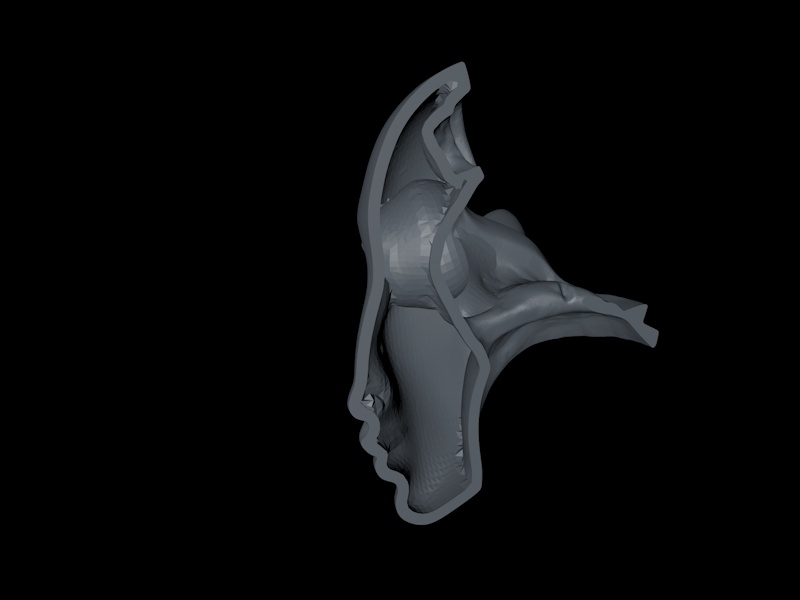
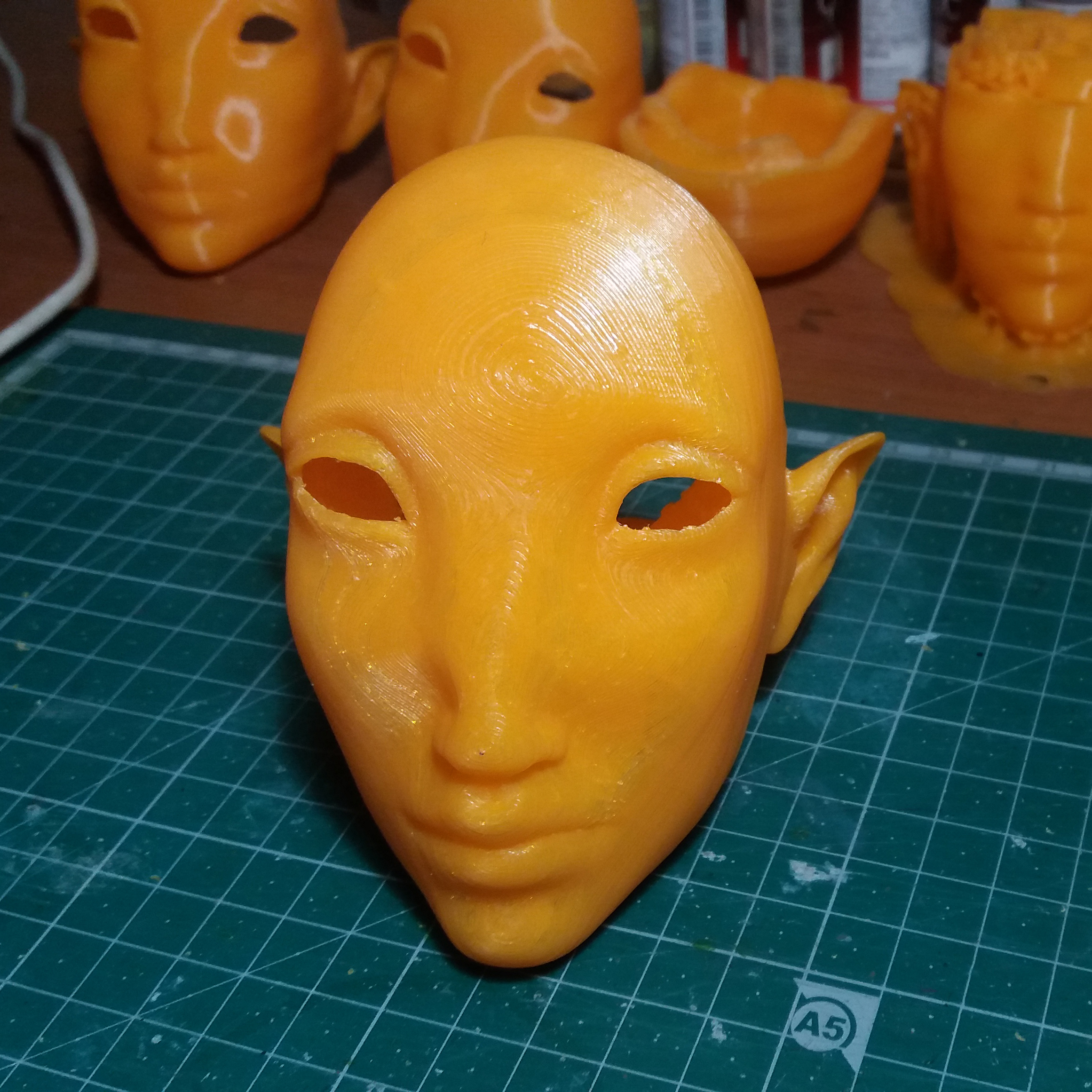
Transform partially scanned sculptural data into structurally reliable digital meshes suitable for high-detail resin fabrication and larger-scale FDM prototyping.
Base geometry derived from photogrammetry scans and refined through digital sculpting and topology adjustments in Cinema 4D. Surface features were preserved while improving mesh continuity and printable topology.
Hollow interior structure designed with a 3 mm wall thickness to balance structural integrity and material efficiency. Internal geometry optimized for eye placement and assembly components.
Neck socket integrated for articulated doll systems. Magnetic attachment designed for removable hair components while maintaining clean external surface continuity.
Primary fabrication via resin printing (Elegoo Mars Pro · 0.05 mm layer height) for surface fidelity. Larger scale prototypes validated using PLA FDM printing at 0.15 mm layer height.
Fabrication-aware geometry · Hollow mesh design · Structural wall control · Assembly constraints · Multi-process print validation
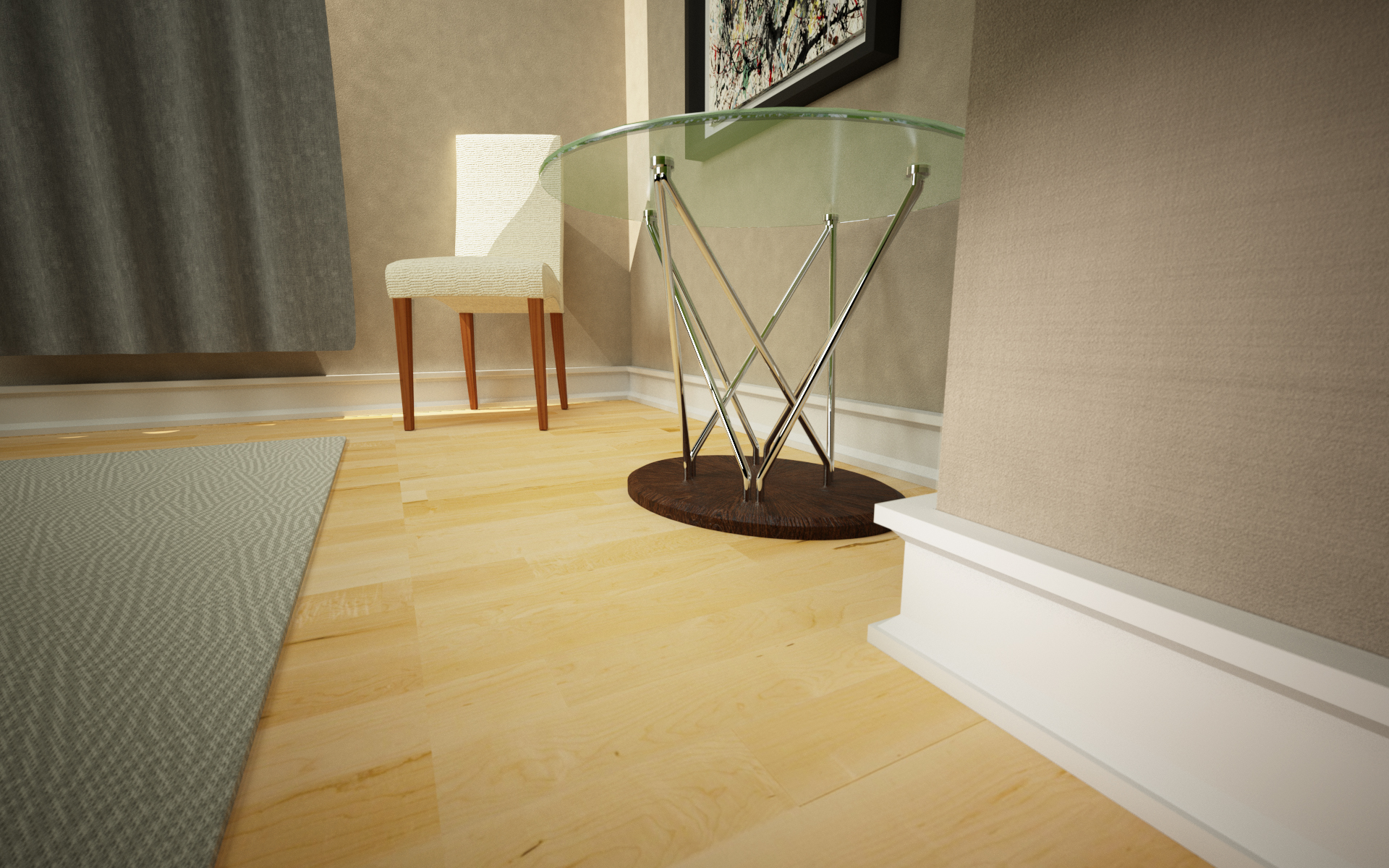
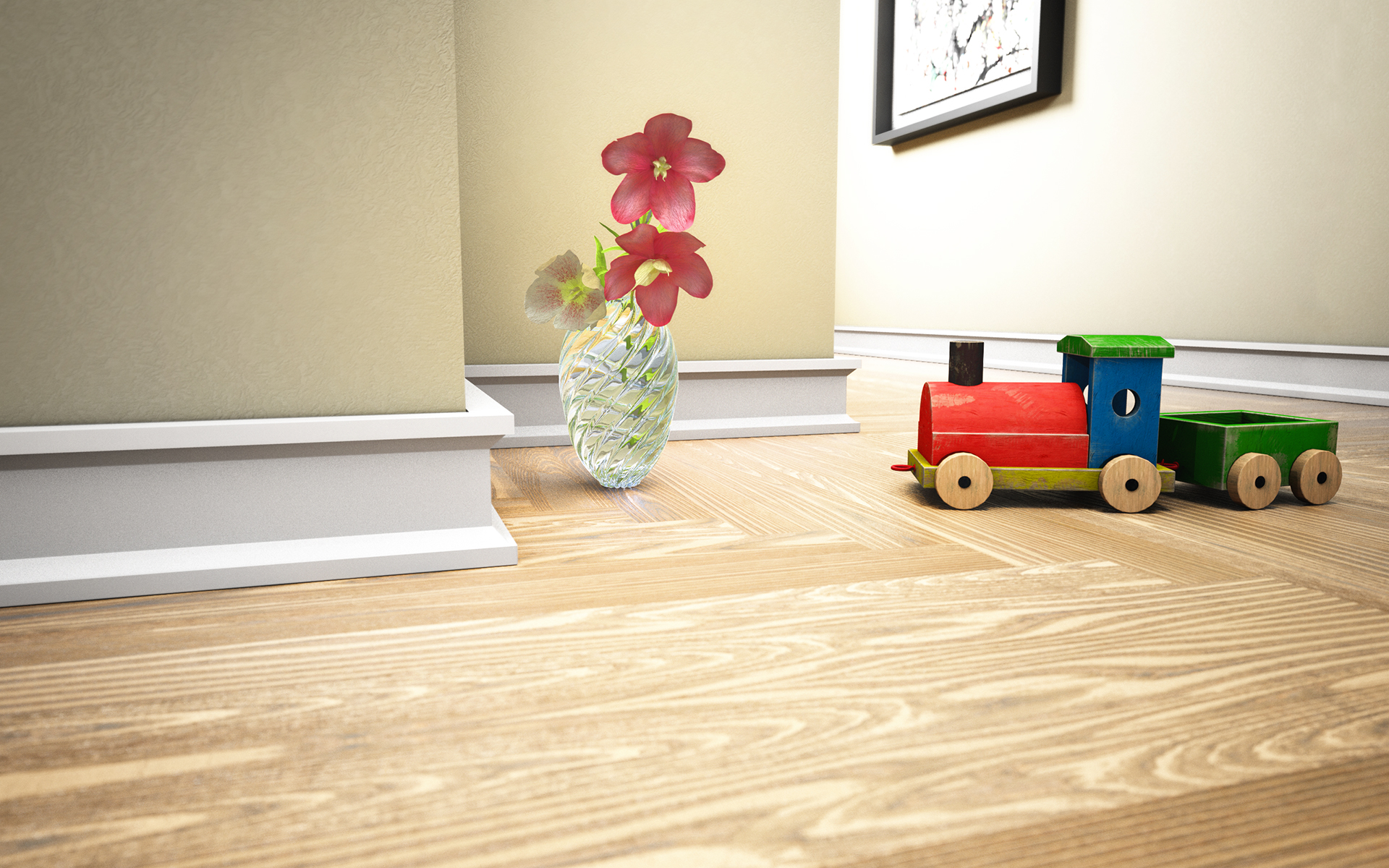
Develop interior visualizations for a custom baseboard manufacturer, focusing on material readability and spatial perception within controlled lighting conditions.
Interior scenes designed to frame architectural baseboard profiles within believable domestic environments. Geometry was modeled manually to ensure clean intersections between wall, floor and trim elements.
Mixed lighting setup combining indirect natural light and artificial interior sources. Emphasis was placed on soft bounce lighting and shadow gradients to enhance edge definition and surface contrast along the baseboard profile.
PBR materials used to reproduce painted surfaces, wood flooring, textile fabrics and reflective elements. Particular attention was given to how subtle variations in roughness and reflectivity interact with indirect lighting across the wall-floor transition.
Indirect lighting · Architectural detail readability · Material contrast · Spatial depth · Product-focused visualization
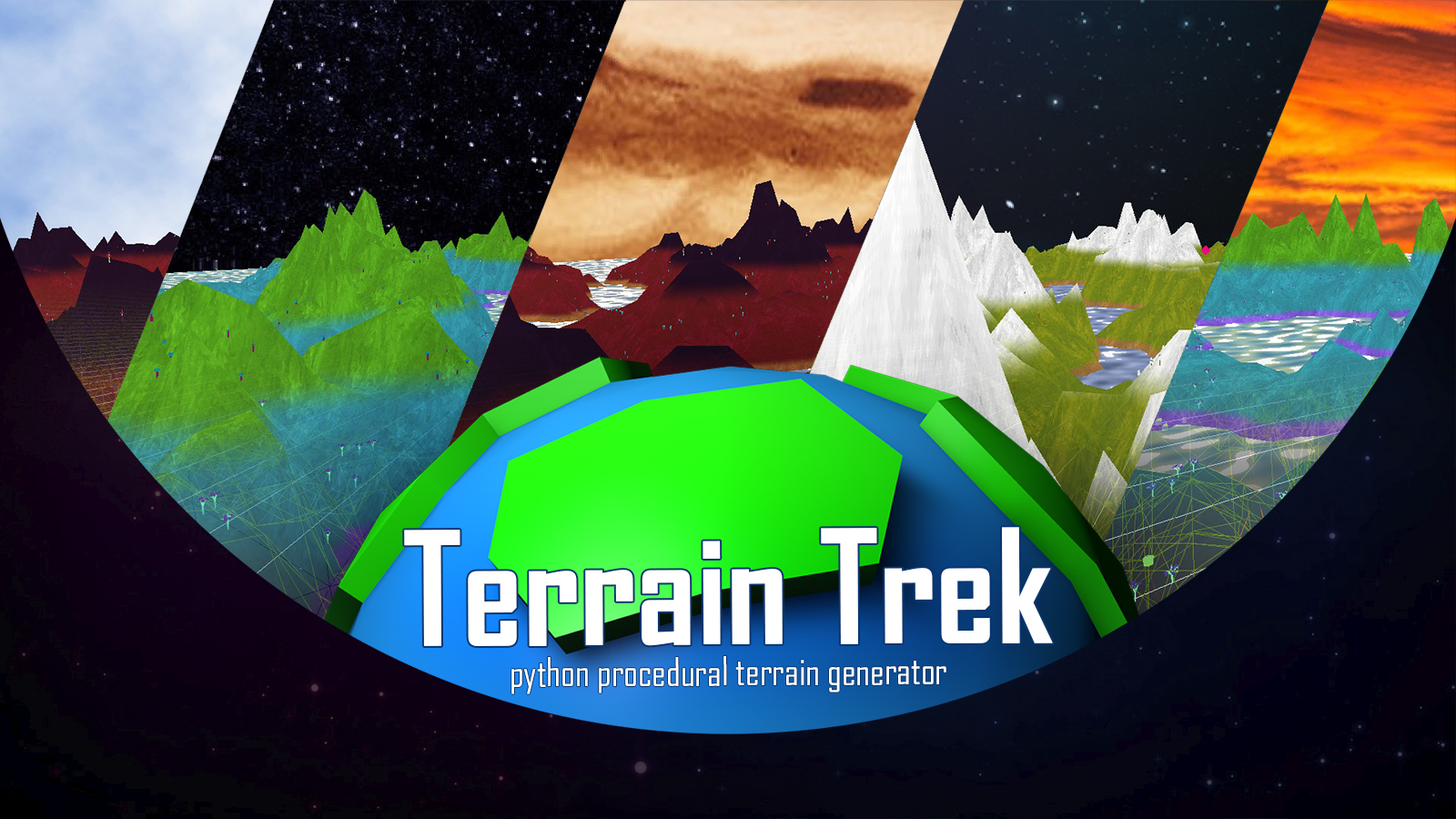
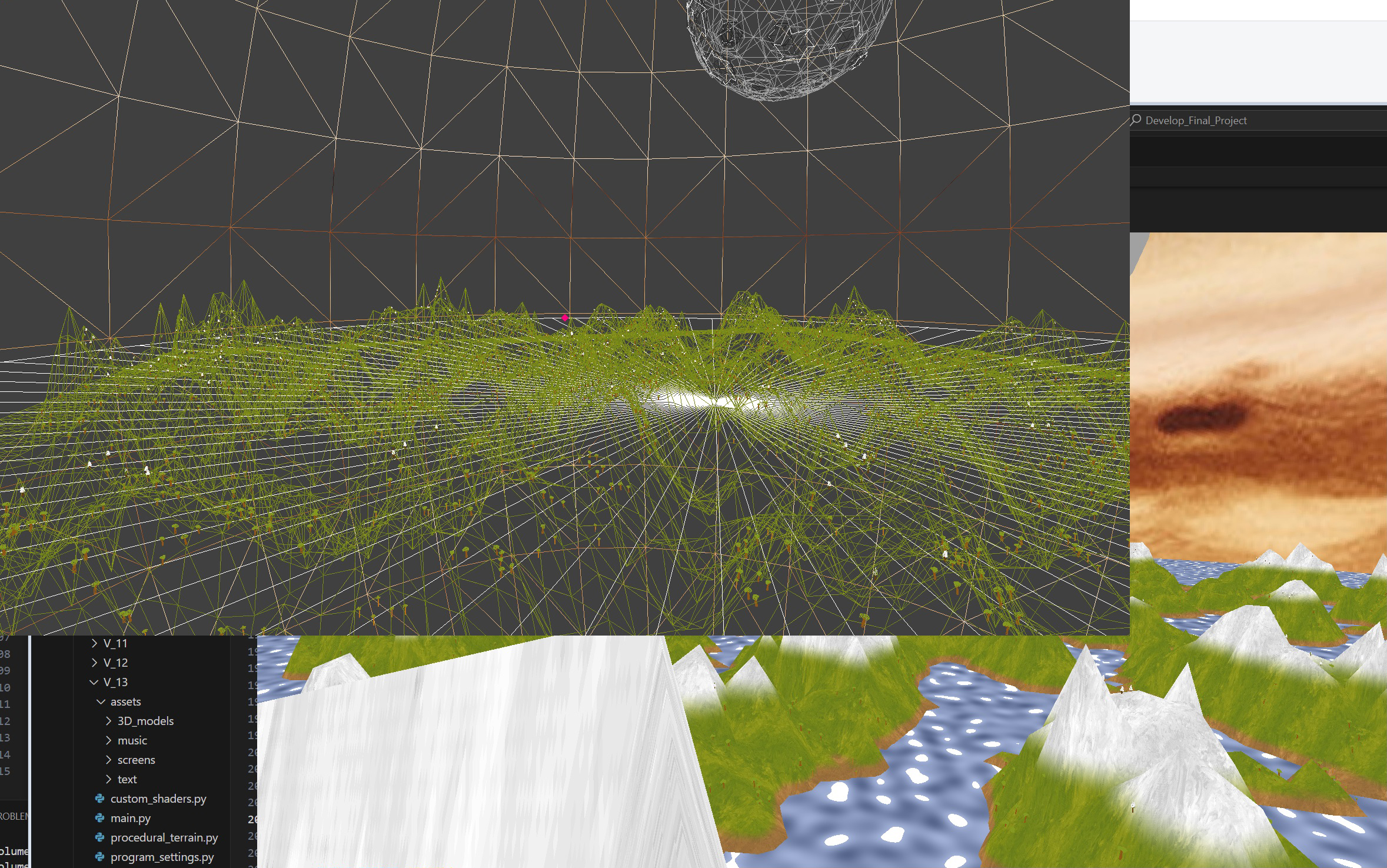
Develop an interactive terrain exploration environment generated procedurally through noise-based algorithms and custom shader systems for planetary surface visualization.
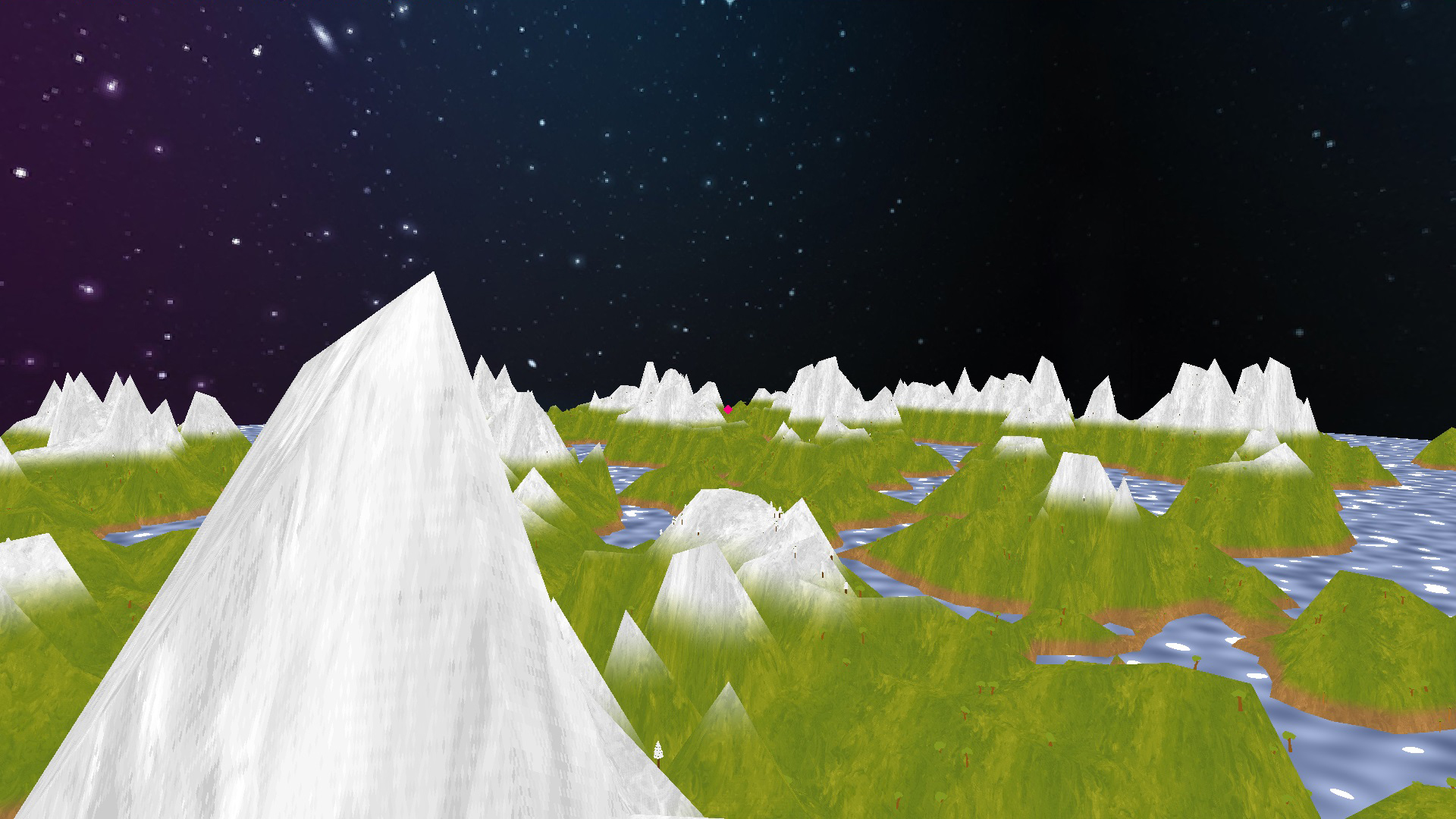
Terrain geometry is generated dynamically via code using Perlin Noise to produce a controllable heightmap. The resulting mesh structure defines elevation ranges that drive environmental variation across the simulated landscape.
A height-based triplanar shader blends three terrain textures according to elevation levels. This system produces smooth transitions between low, mid and high terrain zones while maintaining consistent texture projection across steep surfaces.
Environmental presets simulate different planetary conditions by modifying terrain coloration, water shaders and lighting behavior. Each biome configuration alters the visual identity of the generated landscape while maintaining the same procedural terrain system.
The environment can be explored through a real-time first-person navigation system using WASD movement, allowing users to examine terrain variation and shader-driven surface transitions.
Procedural terrain generation · Height-based shading · Interactive exploration · Environmental systems · Shader-driven material blending
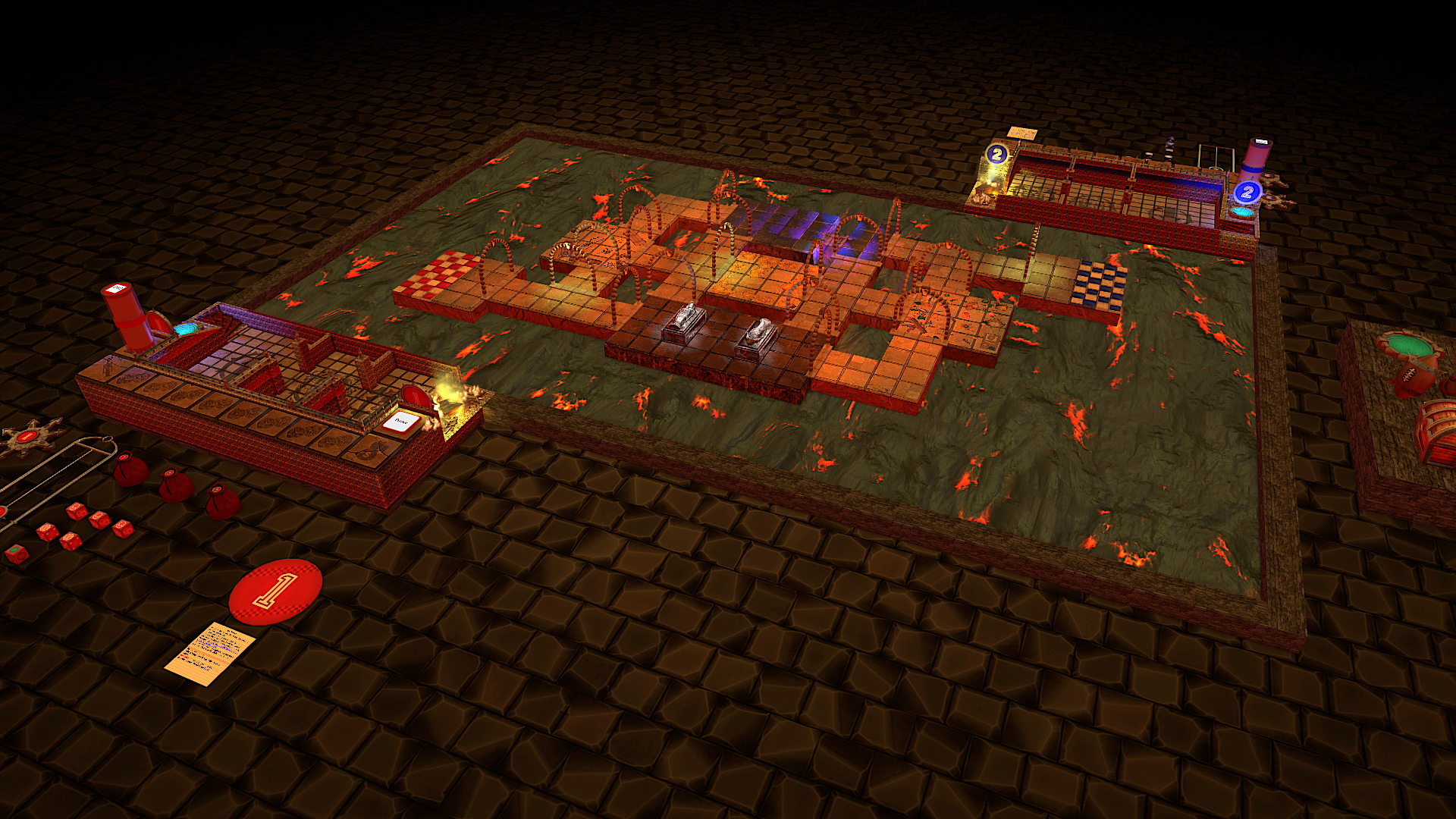
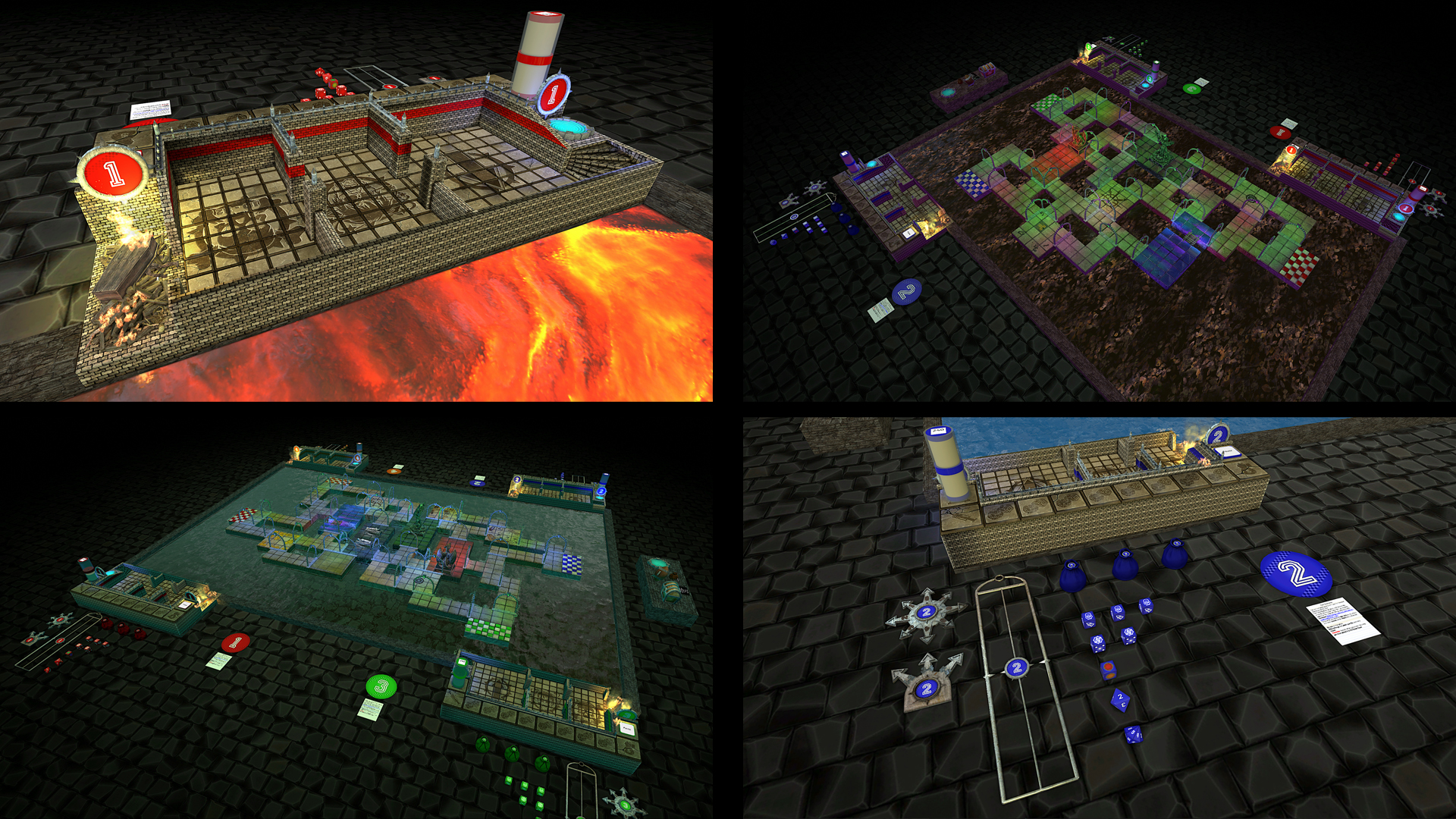
Design a modular interactive environment system for the tabletop game Dungeon Bowl, allowing players to dynamically assemble playable dungeon layouts with scenario-driven spatial configurations.
Created a modular tile-based environment structure supporting configurable dungeon layouts. The system includes environment tiles, special rooms, portals, player areas, and gameplay tokens designed to integrate within Tabletop Simulator's spatial grid system.
Implemented Lua-based configuration logic allowing players to select language, player count, and predefined scenarios. The system automatically deploys terrain tiles, environmental effects, player areas, and gameplay components according to the selected configuration.
Scene assembly logic, modular spatial design, collision-aware tile placement, and interactive environment setup for structured gameplay environments.
The system includes multiple modular environment tiles and 18 pre-configured scenarios across different player counts, supporting rapid setup of structured gameplay environments.
Design a compact mechanical object optimized for high-resolution FDM fabrication using a 0.2 mm nozzle, focusing on surface preservation and controlled assembly.
The model was divided into four independent components to improve print reliability, reduce support structures and preserve surface detail at miniature scale.
Parts were designed with integrated pin-based alignment joints, enabling accurate positioning and simplified post-print assembly.
Geometry was developed using a hybrid parametric and manual workflow in Cinema 4D, taking into account FDM manufacturing constraints including layer orientation and dimensional tolerances.
Tolerances between components were calibrated with 0.2–0.3 mm clearance to ensure reliable assembly after printing.
Fabrication-aware modelling · Part segmentation · Assembly planning · FDM tolerance control · Small-scale surface preservation
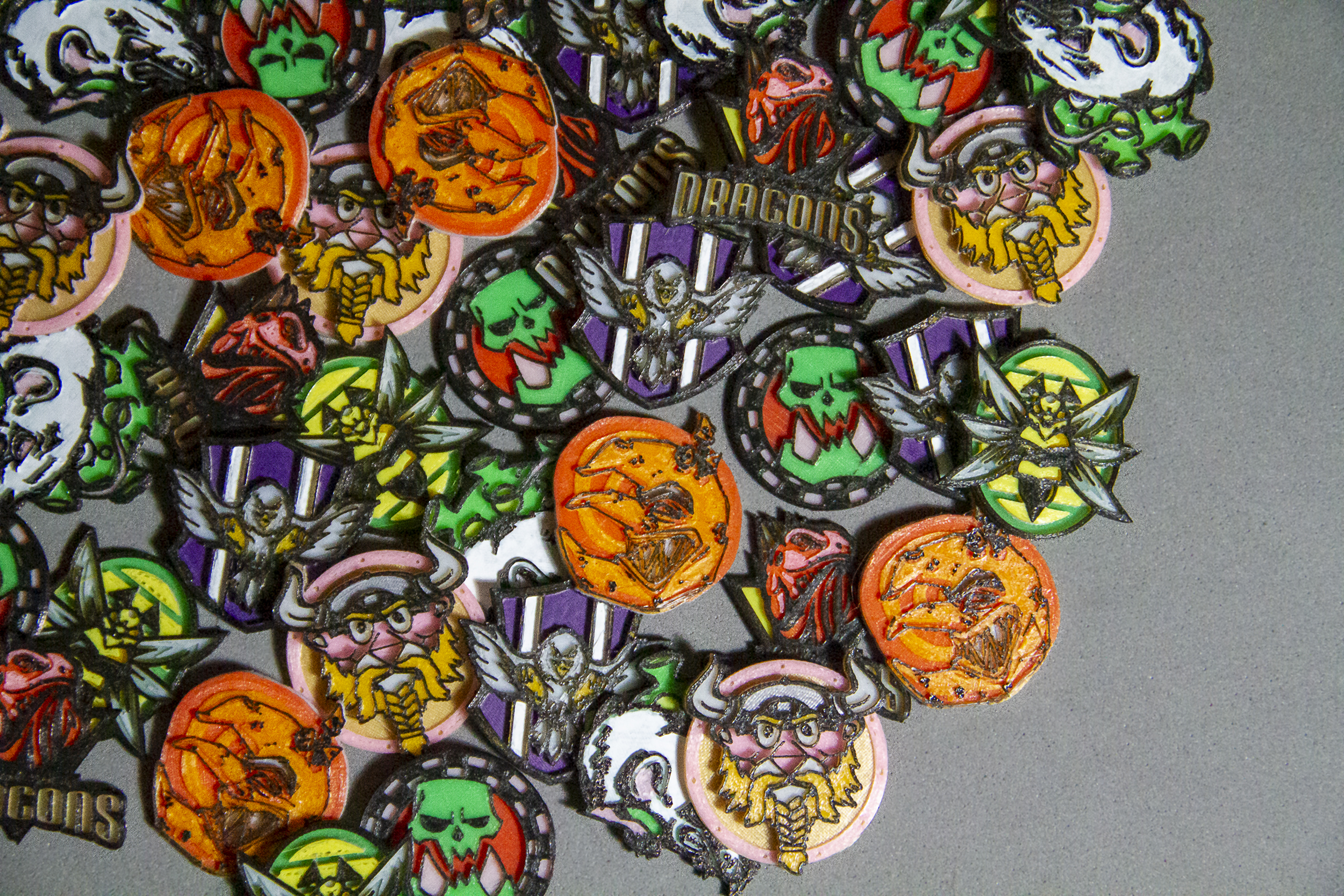
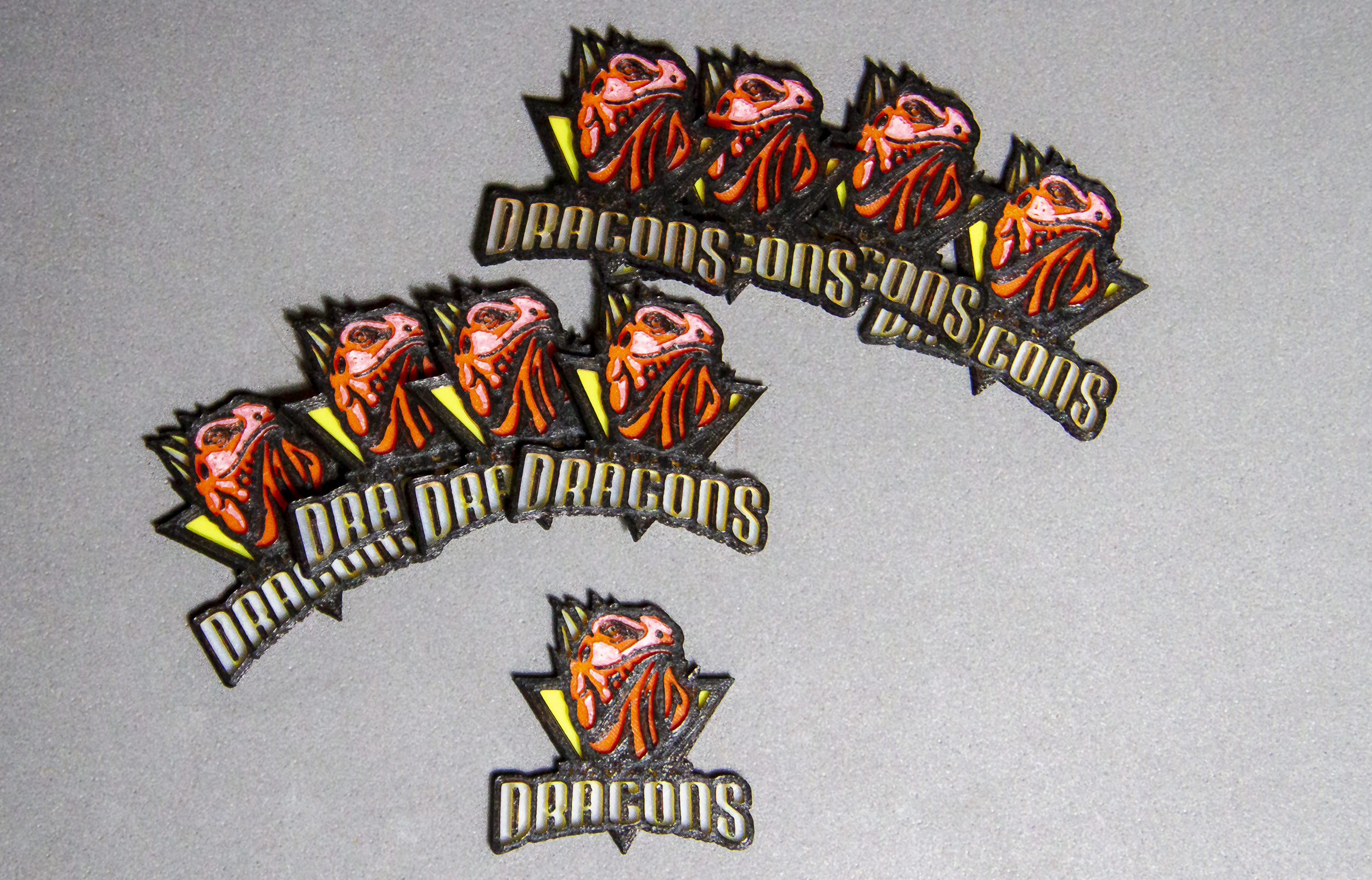
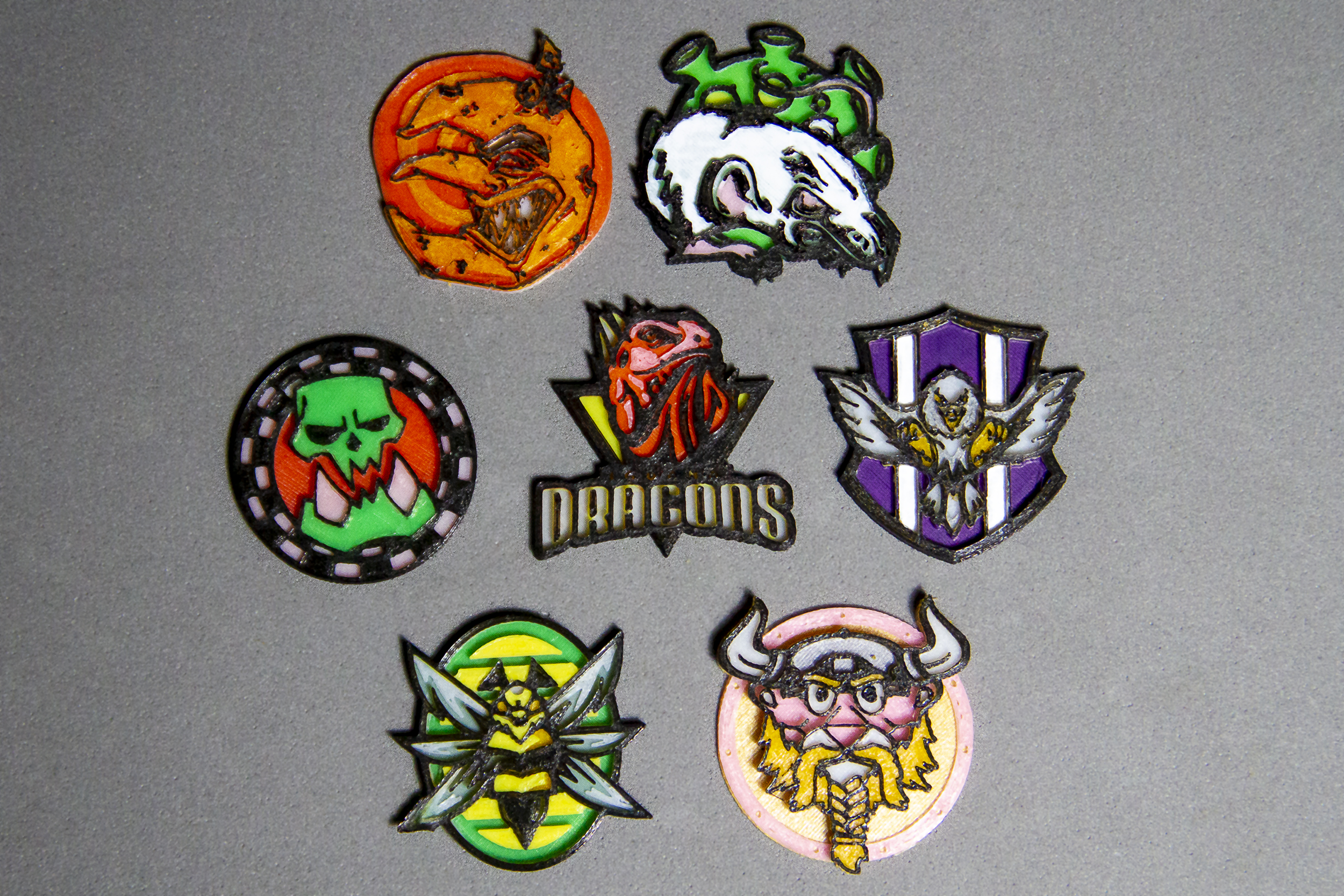
Design compact graphic objects that use controlled layer segmentation to produce multi-color results in single-extrusion FDM printing.
Each token uses relief-based geometry where icon elements are separated by height levels. Color transitions occur by changing filament at specific layer heights during the print process.
Tokens share a common structural base with a consistent diameter of approximately 32 mm. Individual designs vary in silhouette and graphic composition while maintaining the same layered logic.
The geometry is constructed so that each relief level corresponds to a specific color stage, enabling controlled visual separation between background and icon elements.
Layer-driven design · Relief-based geometry · Controlled color transitions · Fabrication-aware graphic objects · Small-scale readability
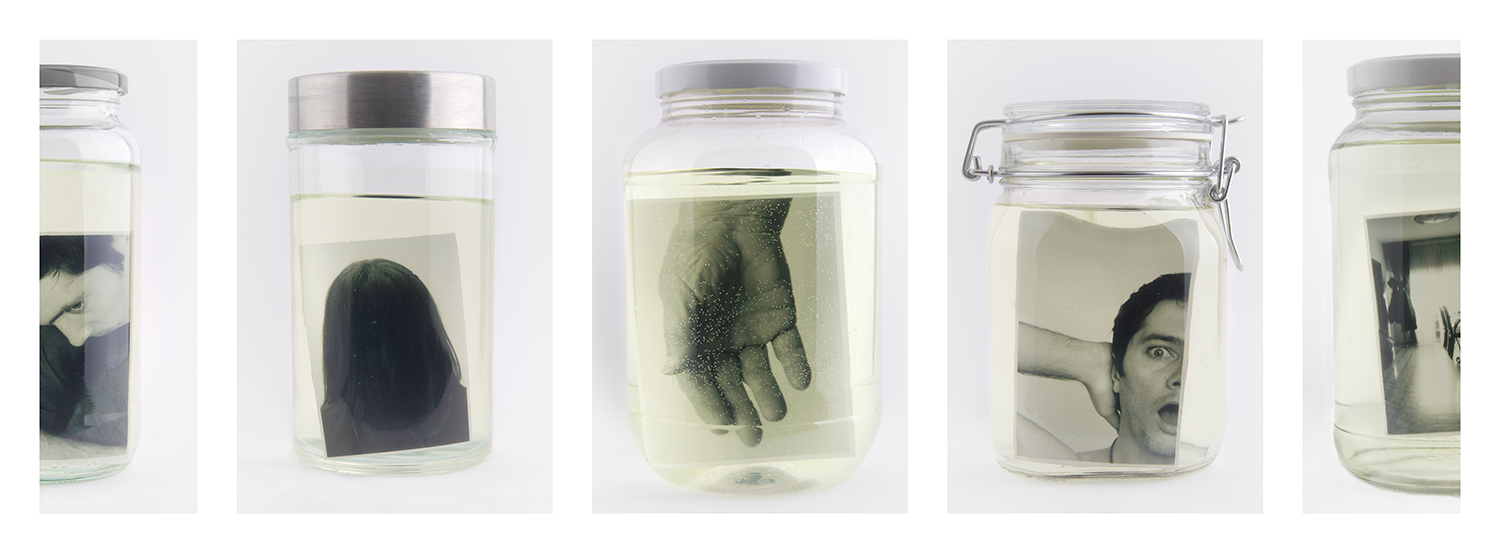
Selected photographic work exploring both controlled studio lighting and conceptual image construction through layered visual elements.
Commercial-style still-life photography focused on symmetry, reflection control, and material perception under studio lighting. The setup emphasizes surface behavior and spatial clarity within a minimal composition.
A conceptual photographic series combining multiple images embedded within glass containers. The project explores how fragmented visual elements can form perceived narratives when interpreted by an observer.
Both works relate to the evaluation of visual information: understanding lighting behavior, material appearance, and how observers interpret complex visual compositions.
I am a 3D generalist with a background spanning digital sculpting, environment modeling, photogrammetry and fabrication-oriented design.
My work focuses on understanding how geometry, light and materials translate between physical and digital systems — from scanned objects and procedural environments to assets designed for real-world fabrication.
I am particularly interested in evaluating spatial coherence, surface behavior and perceptual realism across visual systems.
Tools frequently used include Cinema 4D, ZBrush, photogrammetry pipelines and Python-based procedural experiments.